
Please wait while we process your request
Please wait while we process your request
Try it now!
Calculate your price
Number of pages:
 203
203
 26th Dec 2021
Discussion Question
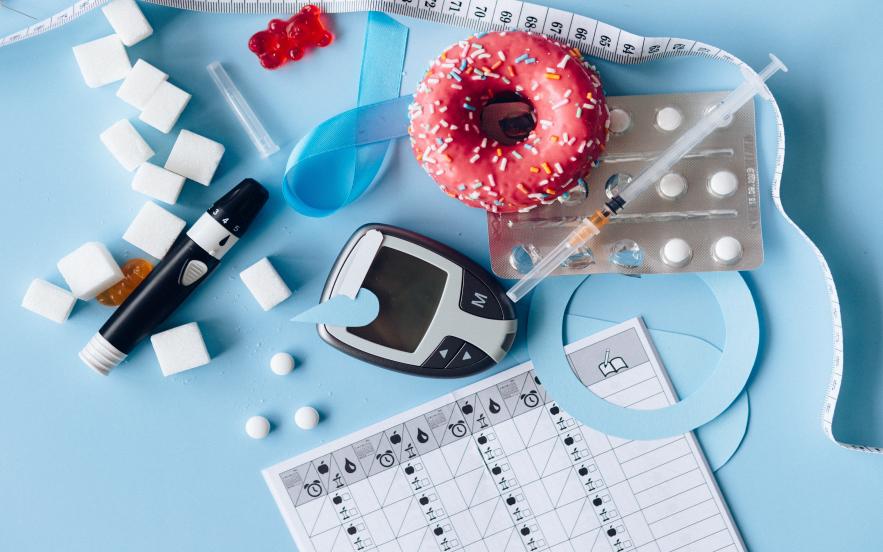
Discuss the value of incorporating the concept of glycemic index and glycemic load into a Type 2 diabetic patient. How do you explain what the GI is? What can you tell the patient about the GI that may help him develop better eating habits?
The basics of glycemic level and index, glucose level, food characteristics, and type 2 diabetes are clearly and concisely presented in a web page published by the Harvard T.H. Chan School of Public Health (2015). Excerpts from that writing are paraphrased here.
Glucose level is the quantity of glucose per unit volume of blood at a point in time for one person. Average and short-term spikes in glucose level are the targets for reduction in the treatment of type 2 diabetes. Glycemic load (GL) is a prediction of the amount a person's glucose level will increase by consuming a specific amount of a particular food type. Glycemic load varies across individuals, and averages over many people have been made and are used to make the predictions or estimates for individuals.
GL is the product of the amount of food consumed multiplied by its glycemic index (GI). A food's GI is the proportion of glucose resultant from consuming a particular amount of this food in proportion to consuming the same amount of pure glucose. It highlights the degree to which a food type converts to glucose rather than the amount of glucose produced by the quantity of food consumed. GI varies by type (for example, apple, corn or beef) and condition of that food (ripeness, protein content, and/or fat content). It is expressed as a percentage. It is defined as the effect on blood sugar level, relative to the effect of an identical amount of a reference food (usually glucose or white bread). It is defined as the area under the blood sugar level plotted for two hours after eating a fixed amount of that food after a 12-hour fast, relative to that of the reference food (Harvard T.H. Chan School of Public Health, 2015). GL is the effect of eating a particular quantity of food on one's glucose level. GI is the glucose-production-effect of a food type relative to a reference food, typically glucose or white bread.
Many studies of counseling have been made for type 2 diabetics. Reviewing them briefly here provides a basis for discussing what individual nurses can do. Lifestyle counseling covering diet, exercise, and other aspects of living was found to associate with moderate improvements in glucose levels and body weight among type 2 diabetics (Vermunt, Milder et al., 2011).
Because the number of pharmaceuticals used to treat type 2 diabetes has been increasing, the frequency of pharmacists counseling patients has greatly increased (Palaian, Chhetri et al., 2004). They advised that the pharmacist counseling include lifestyle factors as well as the use and effects of pharmaceuticals. Mons, Raum et al. (2013) found that a supportive telephone counseling program of twelve months had no effect on blood glucose levels but did have significant beneficial effects on blood pressure, quality of life, and depression.
Studies focusing on nurse counseling, behavior, and lifestyle by telephone (for type 2 diabetics) reported poor results. Poskiparta, Kasila, and Kiuru (2006) found little feedback between healthcare professionals and patients on these variables, although that feedback in both directions was the goal of the program. Mulder, Lokhorst, et al. (2015) found poor nurse-patient communication and little effectiveness in training in patient-centered counseling. They speculated on possible causes and solutions, but the study's finding of poor effectiveness stands as the primary information from the study.
A nurse can tell a patient that the glycemic index identifies which foods to include more of and which to eat less of, based on their rate of conversion to glucose. The GI is explained as a food characteristic that is independent of the quantity of food that a patient may eat. Therefore it is a simpler measure to understand than GL. For most patients distinguishing between GI and GL would likely be more confusing than enlightening. One reasonable goal would be for patients to make changes in their diet components as a result of nurse counseling. The GI ratings for specific foods are widely available online (Med India, 2015), providing the basis for patients to make judgments and dietary changes on their own after counseling.
 Leave
a
Reply
Leave
a
Reply
Your email address will not be published / Required fields are marked *
Calculate your price
Number of pages:
Reset password
Reset password
We’ve sent you an email containing a link that will allow you to reset your password for the next 24 hours.
Please check your spam folder if the email doesn’t appear within a few minutes.