Please wait while we process your request

Try it now!

USD
10

Calculate your price

Number of pages:

Order Now

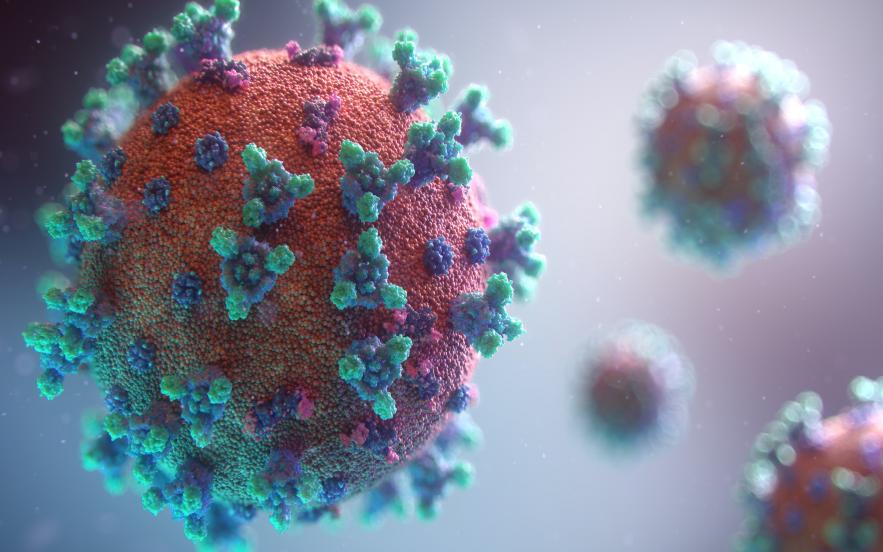
DENGUE ANTIBODY CROSS-REACTIVITY WITH ZIKA VIRUS

169

Instructions for the Review paper assignment

Formatting requirements:

  • 1” all margins
  • Font size 11, Arial
  • Double spacing
  • Footnotes with page numbers and your name

Cover page:

  • Title of your paper
  • Your name and program
  • Name of the course
  • Name of the institution (Department, School, University, City and State)

First page:

  • Abstract (no more than 200 words)
  • Keywords (3 - 5)

Body of the paper:

  • Six pages, exclusive of the Title, Abstract and References pages.
  • Review paper should include:
    • Introduction. This part of the review article is designed to give the reader an idea about the area of research that is reviewed in your article. The last statement in introduction should formulate the topic/question addressed in this study. The review paper is the research project, while the subject/substrate of such study is the original data reported by other researchers (published articles). 
    • The body of the paper should be divided into few sections with subtitles reflecting the subtopics that were reported in the reviewed papers. For example, one of the recent publications addressed the role of the Vitamin D deficiency in the onset of rheumatic diseases. The subtitles in the body of this paper are as follows:  ‘Where vitamin D comes from and how it is measured’; ‘The immunological effects of vitamin D’; ‘Systemic lupus erythematosus and Vitamin D deficiency’; ‘Rheumatoid arthritis and Vitamin D deficiency’; etc. Each of these subtopics is a summation of information from multiple publications (all of which should be referenced).
    • Summary and conclusions. Summary should deliver the message about findings that are consistent among the cited articles (the current trends). The discrepancies among findings between different authors should be reported as well. In such cases offer/suggest the possible causes of the observed disagreements (differences in age population, experimental setting, reagents used are among such possibilities). The final conclusion should be formulated in response to the question posed in the introduction. For example, if you stated in introduction that the objective of your literature search/review was to find out whether a new, side effects-free therapy for rheumatoid arthritis was developed during last five years, in the conclusion part of your article you might say that new drugs (such as …, …, …, …) with much advanced therapeutic effects were developed (ref, ref, ref), however, even though the side effects associated with these therapies are much milder, the  research is still in progress to develop more safe and target-specific therapies.  
  • Tables and graphs should have number, title and a legend. In the text they should be referred by their numbers.


References:

  • All quotations should be properly chosen
    • Any piece of data that is extracted from the periodic publications (journals) should be supported by the corresponding reference
    • Your own statements (speculations, suggestions, conclusions) should not have references
  • References list should be organized according to the requirements of any journal of your choice. I would however recommend using those with numerical way of listing the references (number in the text, and in the reference list the full reference under this number).
  • Stile of referencing should be consistent and followed throughout the manuscript
  • All quotations used in the text should be in the references list
  • In the ‘references’ list should be no references that were not quoted in the text

Tables and graphs:

    • In the review article the tables from the original papers should not be used
    • You can make your own tables or/and graphs to summarize and illustrate your conclusions and interpretations of the reviewed material

Professional language

    • Our every day language is not always suitable for research manuscripts. Below are shown some examples of more appropriate terminology:
    • Instead of ‘to see, or to look at’ – to investigate, to explore, to elucidate
    • Instead of ‘a lot’ – significant, large cohort, numerous
    • Instead of ‘mentioned’ – described, observed, reported
    • Instead of ‘get’ – become, or acquire
    • Instead of ‘it looks as’ or ‘it seems as’ – generated data were supportive of the idea that…, or confirmed the hypothesized concept that…
    • ‘Data’ is plural for Latin word datum, so it’s ‘data are’, not ‘data is’
    • Instead of ‘believed that’ – hypothesized, speculated, suggested

General suggestions:

  1. Review paper should encompass a minimum of 10 to a maximum of 15 articles on the same topic published preferably after 2009
  2. To choose the articles for review paper:
    1. Use any science database available
    2. Enter a few keywords and limiting dates of publication
    3. Pool about 20 articles
    4. Read their abstracts
    5. Make your selection of the articles for your review based on (i) relevance to the chosen topic and (ii) feasibility to clearly understand the content (don’t pick too difficult articles, make sure that you know all terms and concepts)
  3. Read the chosen papers making sure that you clearly appreciate:
    1. The objective/rationale of each particular study (each paper)
    2. The methods utilized
    3. Generated results
  4. Try to draw your conclusions from the presented data (this part consists of three steps):
      1. Scrutinize the tables, figures, graphs and diagrams. Write a list of results that you think were generated based on actual numbers shown in the graphs and tables.
      2. Write your conclusions.
      3. Compare your conclusions with those “claimed” by the authors’ (don’t be surprised if they do not overlap 100%)
  5. Follow the same steps (listed in the points III & IV) for all papers
  6. Make a list of topics/statements/observations/points that were discussed in all reviewed papers. Give each of them a title. Those will be subtopics in your review.
  7. Analyze the data reported in the reviewed papers in the respect of (i) their agreements and (ii) disagreements regarding each of the topics
  8. Try to draw trends and generalizations from the data reported in all reviewed papers
  9. Try to make explanations for the observed disagreements/discrepancies
  10. Write the review using clear-cut statements and simple sentences so that it would be easy to the reader to comprehend your vision of the current status of the topic based on the reviewed articles. This is an ultimate goal of the review article.
  11. Provide your overall summary and conclusions. The following is an example of how to do it (please, do not copy it): The understanding of the…was significantly advanced during the last five years (or did not…). It was learned that… (ref, ref, ref). The gained knowledge will allow further research in this field addressing… Elucidation of these questions will allow … (to apply, to design, clinical adaptation of…). The disagreement among researchers regarding …. could be due to …, or to the fact that ……

Leave a Reply

Your email address will not be published / Required fields are marked *

USD
10

Calculate your price

Number of pages: